
Body Type Styling Tips That Actually Work

If you've ever searched for body type styling advice online, you've probably been told to figure out if you're a pear, apple, hourglass, or rectangle. Then you get the same tired tips: "pears should wear A-line skirts" or "apples should emphasize their legs." But here's the truth: most of us don't fit neatly into these categories, and even if we did, these oversimplified rules don't account for the nuances of your actual proportions.
Real styling is about understanding YOUR specific body, not forcing yourself into a fruit-shaped box. Let's talk about how to dress for your unique proportions with actionable advice that actually works.

Why Traditional Body Type Categories Fall Short
The pear-apple-hourglass system was created as a simplified framework, but bodies are far more complex. You might have broad shoulders AND a defined waist AND fuller hips. You might be petite with long legs and a short torso. You might carry weight in your midsection but have narrow shoulders. These traditional categories can't capture all these variations, and they certainly can't tell you how to dress for them.
Instead of asking "what shape am I?", ask yourself these questions:
Where is my waist in relation to my overall height? (high, natural, or low)
How long is my torso compared to my legs?
What's the relationship between my shoulder width and hip width?
Where do I naturally add or carry weight?
What proportions do I want to emphasize or balance?
Understanding Your Actual Proportions
Let's break down the key proportion relationships that actually matter for styling:
Shoulder-to-Hip Ratio
Stand in front of a mirror and honestly assess whether your shoulders are wider than your hips, narrower than your hips, or roughly the same width.
If your shoulders are broader: You can balance this by adding volume or visual interest at your lower half, wearing structured bottoms, or choosing tops that don't add extra width at the shoulder line. V-necks and scoop necks draw the eye inward rather than across.
If your hips are wider: You can balance this with structured shoulders, statement sleeves, or tops with visual interest at the shoulder and neckline. This doesn't mean hiding your hips, it means creating visual harmony.
If they're balanced: You have flexibility to play with proportion wherever you want to create interest.
Torso Length
Your torso length dramatically affects how clothes fit and where waistlines should hit on your body.
Short torso: Regular-rise pants often hit you awkwardly. Low-rise or mid-rise styles give you more torso length visually. Cropped tops can actually work beautifully because they don't cut you at an unflattering point. Empire waists and dropped-waist styles create better proportions than natural waistlines. When tucking, try a partial tuck or a front tuck rather than a full tuck.
Long torso: High-waisted everything is your friend—it creates leg length and breaks up your torso. Regular-rise pants may hit you at hip level, making your legs look shorter. Longer tops and tunics work better than cropped styles. Belts at your natural waist create definition without awkward proportions.
Vertical Proportions (Height Distribution)
Are you all legs? Even torso and legs? Long torso with shorter legs? This affects everything from dress lengths to where to add visual breaks.
Longer legs, shorter torso: Knee-length and midi skirts/dresses work beautifully. You can handle maxi lengths without being overwhelmed. Avoid cutting your torso with busy belts or color blocking at the waist.
Shorter legs, longer torso: Wear your hems slightly shorter to show more leg. High-waisted bottoms are essential. Monochromatic dressing from waist to toe elongates legs. Ankle pants and cropped styles can work against you unless paired with heels.
Specific Styling Solutions for Common Proportion Challenges
Let's get into the real styling challenges people face and actual solutions that work.
Challenge: Hip Dips
Hip dips are a natural indentation between your hip and thigh. They're completely normal, but many people want to minimize their appearance.
What actually works: A-line skirts and dresses do help here (okay, the traditional advice got one thing right), but so do structured fabrics that skim rather than cling. Pants with a slight flare from the knee down create a smooth line. Avoid tight pencil skirts in thin fabrics. If you love pencil skirts, choose structured fabrics or wear smoothing undergarments.

Challenge: Broad Shoulders
Broad shoulders are powerful and elegant, but if you want to soften them visually, here's how.
What actually works: Raglan sleeves, dropped shoulders, and dolman sleeves don't add structure at the shoulder point. V-necks and scoop necks draw the eye vertically instead of horizontally. Avoid cap sleeves, shoulder pads, and heavily embellished shoulders. Interestingly, sleeveless can work well because it doesn't add bulk, just choose styles without thick straps.

Challenge: Narrow Shoulders
If you want to add visual width or create more balance with your lower half, you need strategic volume.
What actually works: Boat necks, off-the-shoulder styles, and horizontal necklines widen your shoulder line. Structured shoulders, puffed sleeves, and statement sleeves add dimension. Shoulder details like ruffles, epaulettes, or interesting seams create width. Avoid deep V-necks and spaghetti straps if you're trying to add shoulder presence.
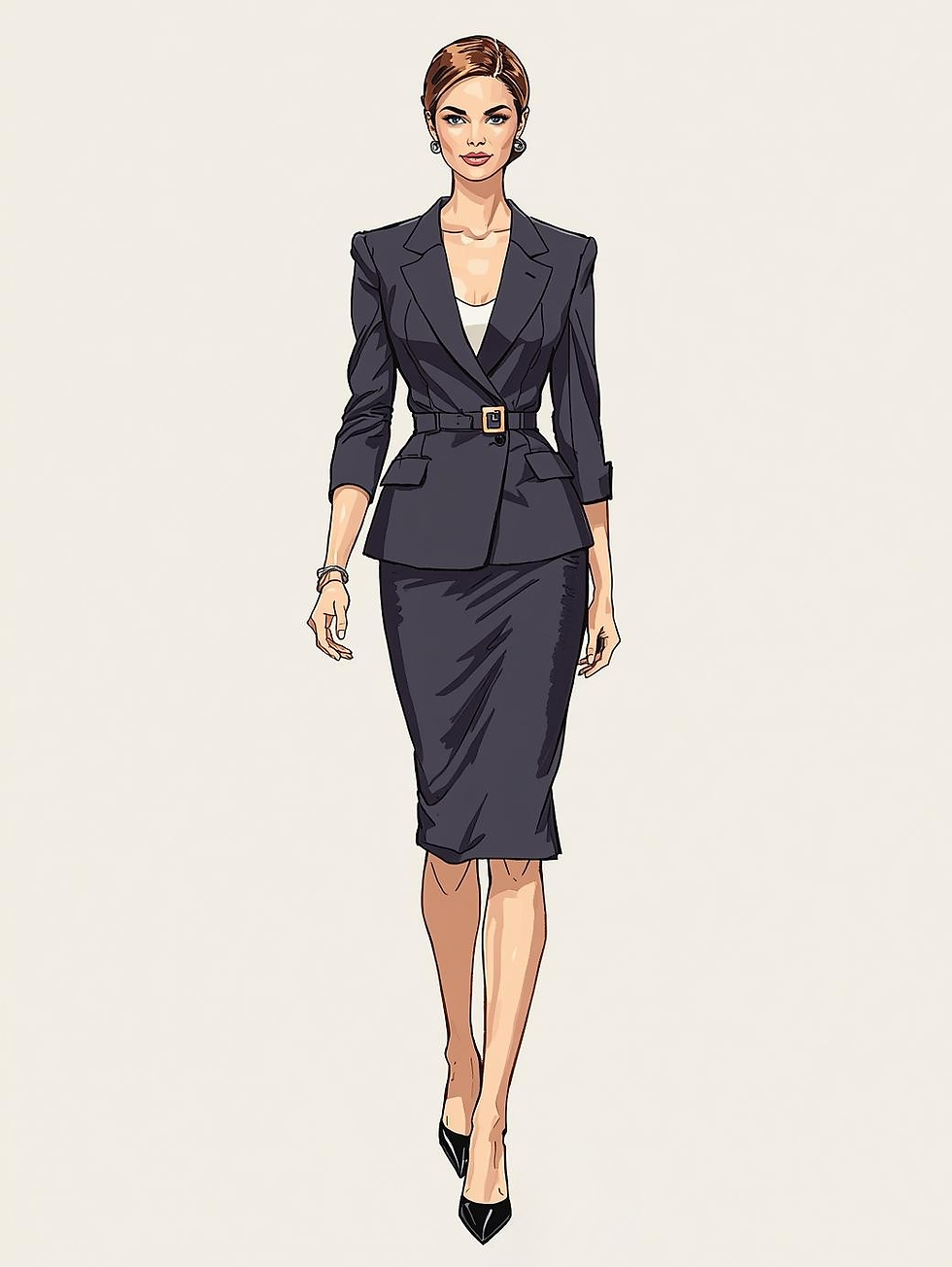
Challenge: Undefined Waist
Whether due to body composition or a straighter torso, an undefined waist can make you feel boxy in certain clothes.
What actually works: Create a waist with belts, but choose the right width—too wide can look costume-y, too thin can get lost. Wrap dresses and tops create shape without requiring a natural waist. Peplum tops add dimension at the waist. Fit-and-flare silhouettes create the illusion of a waist. Avoid boxy, straight-cut tops and dresses that skim straight down—if you wear them, add a belt or layer with a structured jacket.

Challenge: Full Midsection
Carrying weight in your midsection doesn't mean you need to hide in shapeless clothes.
What actually works: Empire waistlines sit above the fullest part of your stomach. A-line and fit-and-flare dresses skim over the midsection while showing your shape. Structured fabrics with some stretch hold their shape without clinging. Vertical details like princess seams or vertical stripes elongate. Avoid super-tight clothing (creates bulges), super-loose clothing (adds volume), and low-rise pants (create muffin top). Mid-rise or high-rise with structured waistbands smooth and support.

Challenge: Short Legs
Making legs appear longer is about where you create visual breaks and how you direct the eye.
What actually works: High-waisted everything—pants, skirts, shorts. Monochromatic dressing from waist to toe, especially in darker colors. Vertical lines and seams on pants. Slightly shorter hemlines (just above the knee for skirts, ankle-length for pants). Pointed-toe shoes extend the leg line. Avoid ankle straps, capri pants, and dropping your waistline—these all cut you visually and shorten your legs.

How to Break the "Rules" When They Don't Serve You
All of this advice is meant to give you tools, not restrict you. If you have a short torso but you absolutely love cropped cardigans, wear them! If you have broad shoulders but you're obsessed with statement sleeves, go for it! Style is about what makes YOU feel confident and authentic.
The goal isn't to "fix" your body or make it look like something it's not. The goal is to understand how clothes interact with your proportions so you can make intentional choices. Sometimes you'll want to create balance. Sometimes you'll want to emphasize something. Sometimes you'll just want to wear what you love regardless of whether it "flatters" according to some arbitrary standard.
The difference between someone who's style-confident and someone who's not isn't their body type—it's their understanding of what works for them and their willingness to experiment.
Your Action Plan
Here's how to put this into practice:
Take honest measurements. Note your shoulder width, hip width, torso length, inseam, and where your natural waist sits. This gives you objective data to work with.
Identify your proportion priorities. What do you want to emphasize? What do you want to balance? What matters to you?
Try the opposite of what you usually do. If you always wear low-rise jeans, try high-rise. If you avoid belts, experiment with them. Sometimes our habits are based on outdated advice rather than what actually works.
Take photos. What you see in the mirror while moving isn't always what others see. Take photos of outfits to see them objectively.
Build a relationship with a good tailor. Seriously, this will change your life.
Keep what makes you feel amazing. Ultimately, the best outfit is the one that makes you feel confident and like yourself.
Ready to discover what truly works for YOUR unique proportions? Personal styling is about understanding your body and creating a wardrobe that works for your real life. If you'd like personalized guidance tailored specifically to you, I'd love to help. Learn more about my styling services here.

Comments